You got 2 bids for the same remodel. One remodeler said $50,000, and we said $80,000. Which number covers more, and which one is likely to hold once the walls come open?
You’ll learn:
- What our fixed price means
- How a fixed price differs from a quick quote
- What’s settled before you sign
- How the price rises or falls
- Why our fixed price is often the higher number
- What to check in any proposal
What Is a Fixed Price, and How Does It Protect You?
Once you sign a proposal, the price covers the work it describes. It changes mainly when you add or remove work, pick a different finish tier, or make a final choice above or below an allowance. It’s one price. We don’t break it into a labor number and a material number, and we don’t send itemized quotes.
A fixed price protects you because we try to make every decision we can in design, before we start building, so fewer change orders come up later.
How Is a Fixed Price Different from a Quick Quote?
Suppose you’re holding a $50,000 bid from someone else, and ours is $80,000. We’ll ask what’s in the lower one, because it might be labor only, or materials only, and it may or may not include design. Sometimes it’s just a price per square foot, and a number like that is hard to compare with a written proposal.
| Bid | What the number may cover |
|---|---|
| $50,000 from another remodeler | Labor only, materials only, or a price per square foot, with design included or not |
| $80,000 from us | The full written scope and finish level in your proposal |
Usually the other bid is just a number, with no written proposal.
What Gets Settled Before You Sign?
Before you sign, we talk on the phone, then come out to your home to go over the scope, your budget, and the level of finish you want. To see each step, read Inside Your Remodel.
Any change you make in design is priced on its own, so you can decide whether to go ahead with it.
What Is Written into Your Proposal?
Your proposal describes the job in order, in plain sentences. It opens with a short project summary and your goals, then covers each section, like design and selections, permits, dust protection, demolition, each trade, painting, debris disposal, and the contingency.
It names products where we know them, like a specific garbage disposal or outlet brand. Where a selection isn’t final yet, it gives an allowance, like a set amount for the appliance package, and a change order adjusts the price if your final choice comes in above or below it. It also says what isn’t included, like painting the ceiling, and what you’re responsible for, like clearing out the kitchen before we start.
Photos or floor plans attached to the proposal only show the general look and quality. What you pick in design replaces them. If it isn’t written in the proposal, it isn’t in the price.
Why Tie the Price to a Finish Tier?
A flat $200,000 says little about a kitchen, because the same kitchen can be built with very different faucets, appliances, and cabinets. Without a set finish level, our price and your selections can end up far apart.
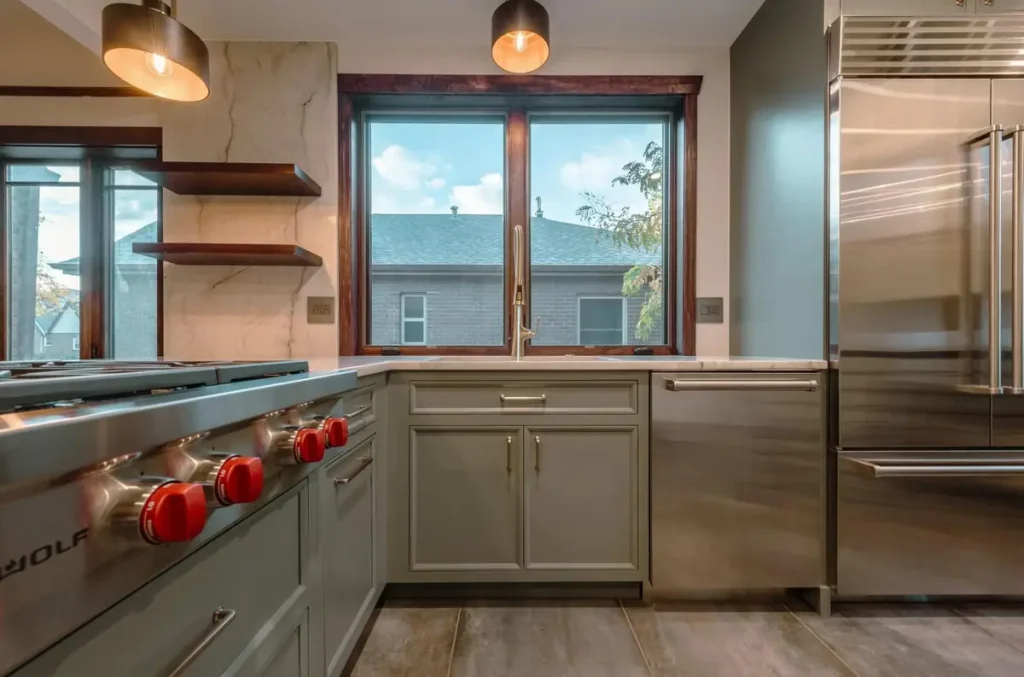
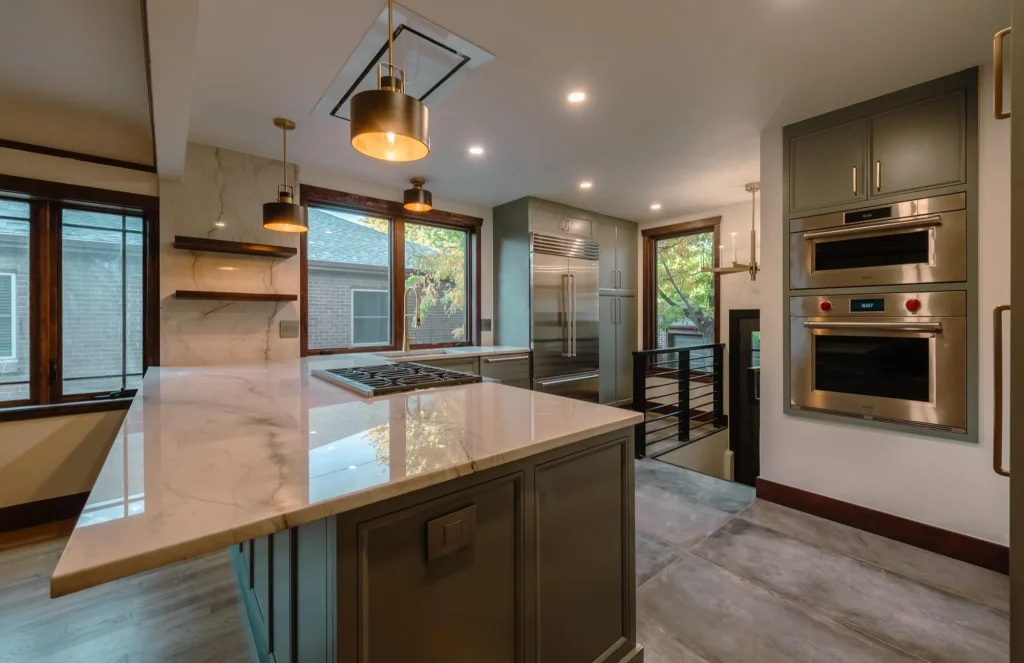
Some of our newer kitchen remodeling proposals tie the price to a finish level and name likely products, like a Delta faucet line, an LG appliance package in one tier, or a Wolf package in another. Our Park Hill kitchen has Wolf appliances. For real numbers, see our kitchen remodel cost page.
How Can the Price Rise or Fall?
Most price changes start with something you pick. Each one is written up as a change order with its price, and you approve it before we do the work.
What Changes During the Design Phase?
One client found a faucet they loved. We let them know we’d budgeted for Delta, and this one was Delta’s luxury brand, so it would cost more. People change their selections more often than they change the work itself. Most budgets rise a little in design, and once it’s done, they typically land within about 10% of the tier you picked. Going down a tier is a change order too.
What If We Find Problems After Construction Starts?
Say the walls come open and there’s something nobody could see before. That’s different from a change you request. We build a contingency into the price for the problems we regularly run into, so the usual ones we find inside our work area don’t cost you more. We fix them, and that’s it.
Very rarely, we find something severe, like damage throughout the home. That costs more than the contingency covers. We go over the options with you before we do any extra work.
Why Is a Fixed-Price Bid Often the Higher Number?
We’re often the more expensive bid. Part of that is the contingency, and part is that we price in the problems we see coming.
What Do We Expect to Find in an Older Home?
We spend about half our time in older homes, and we’ve done enough to know what’s usually behind the walls.
So on older homes, we tell people on the phone to expect our price to be 15 to 20% higher, depending on the neighborhood. A $100,000 job is closer to $120,000.
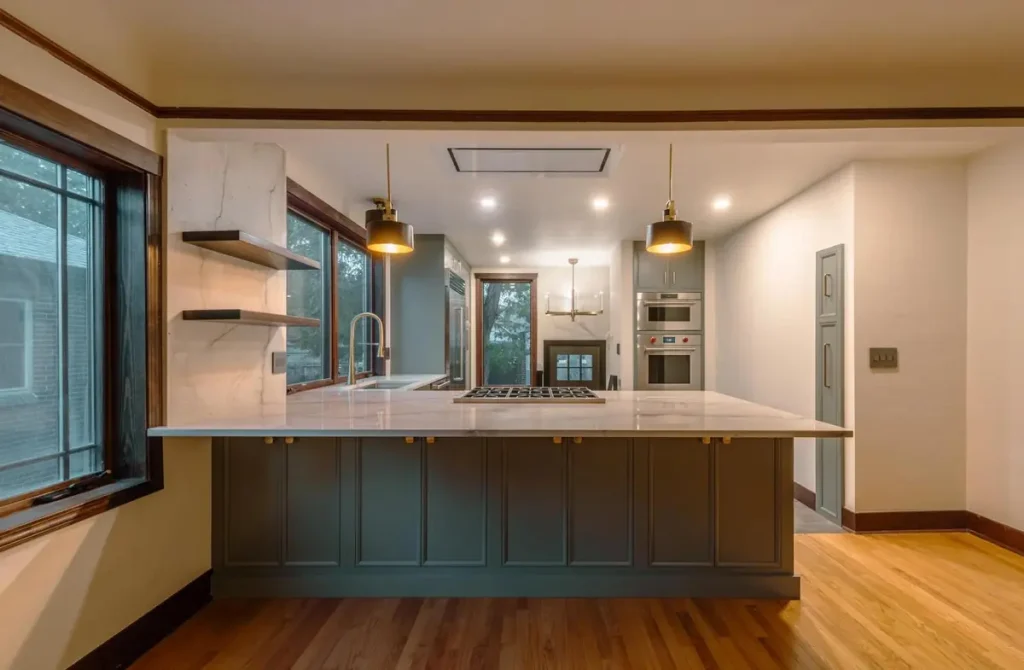
Partway through our kitchen remodel in Park Hill, we found that the ceiling joists were 2-by-4s and sagging by 3 or 4 inches. The old joists couldn’t support the weight of the plaster and drywall, so we decided on-site to replace them with stronger ones. Our price had room to cover it at no extra charge.
What Should You Look for in a Proposal?
If you have a proposal in hand, from us or anyone else, ask 3 questions:
- What does it say is included, and what isn’t?
- Which finish level does the price assume?
- How does it handle changes?
What Does a D&D Remodeling Price Cover?
Our price covers the written scope and finish level in your proposal. If you’re comparing bids, we’ll go over what would change it. Fill out our contact form or give us a call.